


Mobile communication technologies and ontological security
Article Sidebar
Main Article Content
Resumen
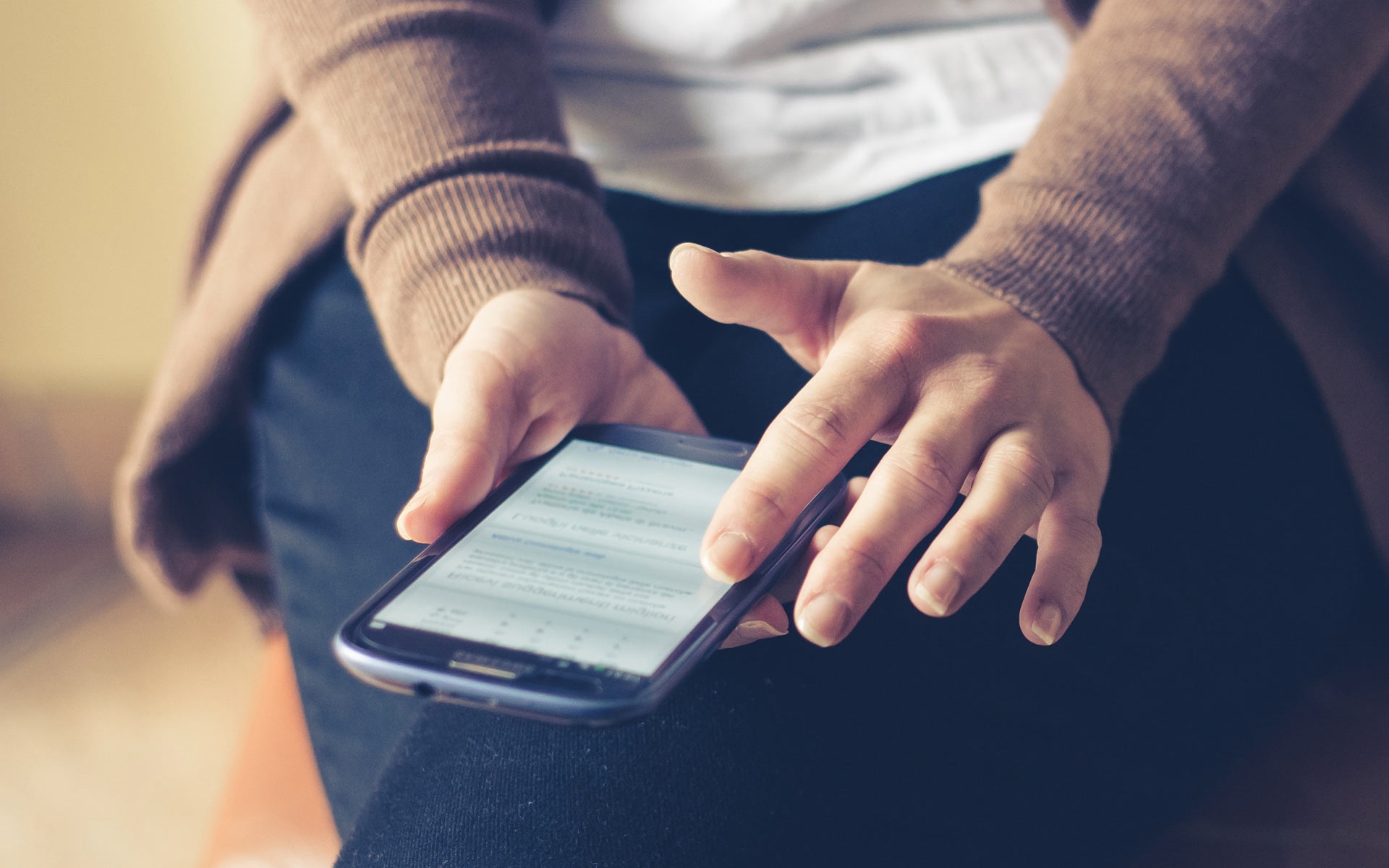
This paper analyzes the relationship between everyday life and the mass use of mobile communication technologies, especially smartphones. From a methodological point of view, qualitative research was used in order to grasp the meanings people give to the use of such technologies. Data were gathered through 24 focus groups and 20 in-depth interviews with youths aged between 16 and 25 years of age in Santiago de Chile between 2014 and 2015. Results show that the people’s uses of mobile communication systems would be creating changes in the daily experience of time and space, and in the way in which they give stability, structure and meaning to the intersubjective world. The article concludes that the concept of ubiquitous everyday life, or hyper everyday life, may explain the meaning of the current transformations.
##plugins.generic.usageStats.downloads##
Article Details

Esta obra está bajo licencia internacional Creative Commons Reconocimiento-NoComercial-SinObrasDerivadas 4.0.
Los autores/as que publiquen en esta revista aceptan las siguientes condiciones:
a. Los autores/as conservarán sus derechos de autoría y garantizarán a la revista el derecho de primera publicación de su obra, el cual estará simultáneamente sujeto a la Licencia de atribución no comercial ni obras derivadas 4.0 (CC-BY-NC-ND 4.0) que permite a terceros compartir la obra siempre que se indique su autoría y su primera publicación en esta revista.
b. Los autores/as pueden realizar otros acuerdos contractuales independientes y adicionales para la distribución no exclusiva de la versión del artículo publicado (p. ej., incluirlo en un repositorio institucional o publicarlo en un libro) siempre que indiquen claramente que el trabajo se publicó por primera vez en esta revista.
c. Se permite y recomienda a los autores/as a publicar su trabajo en Internet (por ejemplo en páginas institucionales o personales) posterior al proceso de revisión y publicación, ya que puede conducir a intercambios productivos y a una mayor y más rápida difusión del trabajo publicado (vea The Effect of Open Access).
Citas
Back, Les (2015), “Why everyday life matters: class, community and making life livable”, in Sociology, vol. 49, no. 5, United Kingdom: Sage.
Bettetini, Gianfranco (2008), “L’Audiovisivo”, in Scolari, Carlos, Hipermediaciones. Elementos para una teoría de la comunicación digital interactiva, Spain: Gedisa.
Bravo, Cecilia (2013), “Histoire de la télévision au Chili”, in Amigo-Latorre, Bernardo and Lochard, Guy [comps.], Identités télévisuelles. Une comparaison France-Chili, France: l’Harmattan.
Brickell, Chris (2012), “Sexuality, power and the sociology of the Internet”, in Current Sociology, vol. 60, no. 1, United Kingdom: Sage.
Burchell, Kenzie (2015), “Tasking the everyday: Where mobile and online communication take time”, in Mobile Media & Communication, vol. 3, no. 1, United Kingdom: Sage.
Canales, Manuel (2013), Escucha de la escucha, Chile: LOM Ediciones.
Cetina, Karin and Bruegger, Urs (2002), “Inhabiting technology: the global lifeform of financial markets”, in Current Sociology, vol. 50, no. 3, United Kingdom: Sage.
Chan, Michael (2015), “Mobile phones and the good life: Examining the relationships among mobile use, social capital and subjective well-being”, in New Media & Society, vol. 17, no. 1, United Kingdom: Sage.
Couldry, Nick (2008), “Mediatization or mediation? Alternative understandings of the emergent space of digital storytelling”, in New Media & Society, vol. 10, no. 3, United Kingdom: Sage.
De Certeau, Michelle (1984), The practice of everyday life, USA: University of California Press.
Dwyer, Tim (2010), Media convergence, England: McGraw-Hill.
Garfinkel, Harold (1967), Studies in ethnomethodology, USA: Prentice-Hall.
Giddens, Anthony (1984), The constitution of society: outline of the theory of structuration, England: Polity Press.
Giddens, Anthony (1991), Modernity and self-identity. Self and society in the late modern age, USA: Stanford University Press.
Goffman, Ervin (1956), The representation of self in everyday life, England: University of Edinburgh.
Goggin, Gerard (2014), “Facebook’s mobile career”, in New Media & Society, vol. 16, no. 7, United Kingdom: Sage.
Guadarrama, Luis and Valero, Jannet (2009), “Tecnologías de la información y la comunicación [TIC] desde el concepto de ‘calidad de vida’”, in Convergencia, vol. 16. Available at: www.redalyc.org/articulo.oa?id=10512244009 [March 25th, 2016].
Halpern, Daniel (2012), Nuevas tendencias y diferencias culturales en el uso de telefonía móvil. Available at: http://www.iab.cl/wp-content/files_mf/tendencias_telefonia_movil.pdf [March 25th, 2016].
Heller, Agnes (1984), Everyday life, England: Routledge and Kegan Paul.
Hine, Christine (2004), Etnografía virtual, Barcelona: UOC.
Ibáñez, Jesús (1994), Por una sociología de la vida cotidiana, Spain: Siglo XXI.
INE (Instituto Nacional de Estadísticas de Chile) (2012), Síntesis de resultados del Censo 2012, Chile: Publicaciones INE.
Jenkins, Henry (2006), Convergence culture: where old and new media collide, USA: New York University Press.
Jensen, Klauss (2010), Media convergence: The three degrees of network, mass, and interpersonal communication, USA: Taylor & Francis.
Kalekin-Fishman, Devorah (2013), “Sociology of everyday life”, in Current Sociology, vol. 61, United Kingdom: Sage.
Kiss, Diana and Castro, Eduardo (2004), “Comunicación Interpersonal en Internet”, in Convergencia, no. 36. Available at: http://convergencia.uaemex.mx/article/view/1534/1172 [March 25th, 2016].
Lefebvre, Henri (1962), Critique de la vie quotidienne (II): Fondements d’une sociologie de la quotidienneté, France: L’Arche.
Mandiberg, Michael (2012), The social media reader, USA: New York University Press.
Marshall, Martin (1996), “Sampling for qualitative research”, in Family Practice, vol. 13, no. 6, United Kingdom: Oxford University Press.
Murduchowicz, Roxana (2008), Los jóvenes y las pantallas, Spain: Gedisa.
Ritchie, Jane et al. (2014), Qualitative research practice: a guide for social science students and researchers, England: Sage.
Rovira-Sancho, Guiomar (2013), “Activismo mediático y criminalización de la protesta: medios y movimientos sociales en México”, in Convergencia, no. 61. Available at: http://convergencia.uaemex.mx/article/view/1049/778 [March 25th, 2016].
Sanz, Esteve and Stancik, Juraj (2014), “Your search -‘ontological security’- matched 111,000 documents: an empirical substantiation of the cultural dimension of online search”, in New Media & Society, vol. 16, no. 2, United Kingdom: Sage.
Schutz, Alfred (1945), “On multiple realities”, Philosophy and Phenomenological Research, vol. 5, no. 4. Available at: http://www.jstor.org/stable/2102818 [March 25th, 2016].
Schutz, Alfred (1972), The phenomenology of the social world, Evanston, USA: Northwestern University Press.
Schutz, Alfred and Luckmann, Thomas (1973), The structures of the life-world, vol. 1, USA: Northwestern University Press.
Scolari, Carlos (2010), Hipermediaciones. Elementos para una teoría de la comunicación digital interactiva, Spain: Gedisa.
Seiler, Steven and Kidwell, Josiah (2016), “Defining the mobile-digital situation within perpetual telecopresence: An exploratory study of the impact of mobile phones on the life-world”, in Sociological Spectrum, vol. 36, no. 4, United Kingdom: Taylor & Francis.
Silverstone, Roger (1994), Television and everyday life, New York: Routledge
SUBTEL-IPSOS (2016), VII Encuesta de Acceso, Usos y Usuarios de Internet, Chile: Subsecretaría de Telecomunicaciones del Gobierno de Chile.
Thorson, Kjerstin et al. (2013), “Youtube, Twitter and the Occupy Movement: Connecting content and circulation practices”, in Information Communication & Society, vol. 16, no. 3, United Kingdom: Taylor & Francis.